
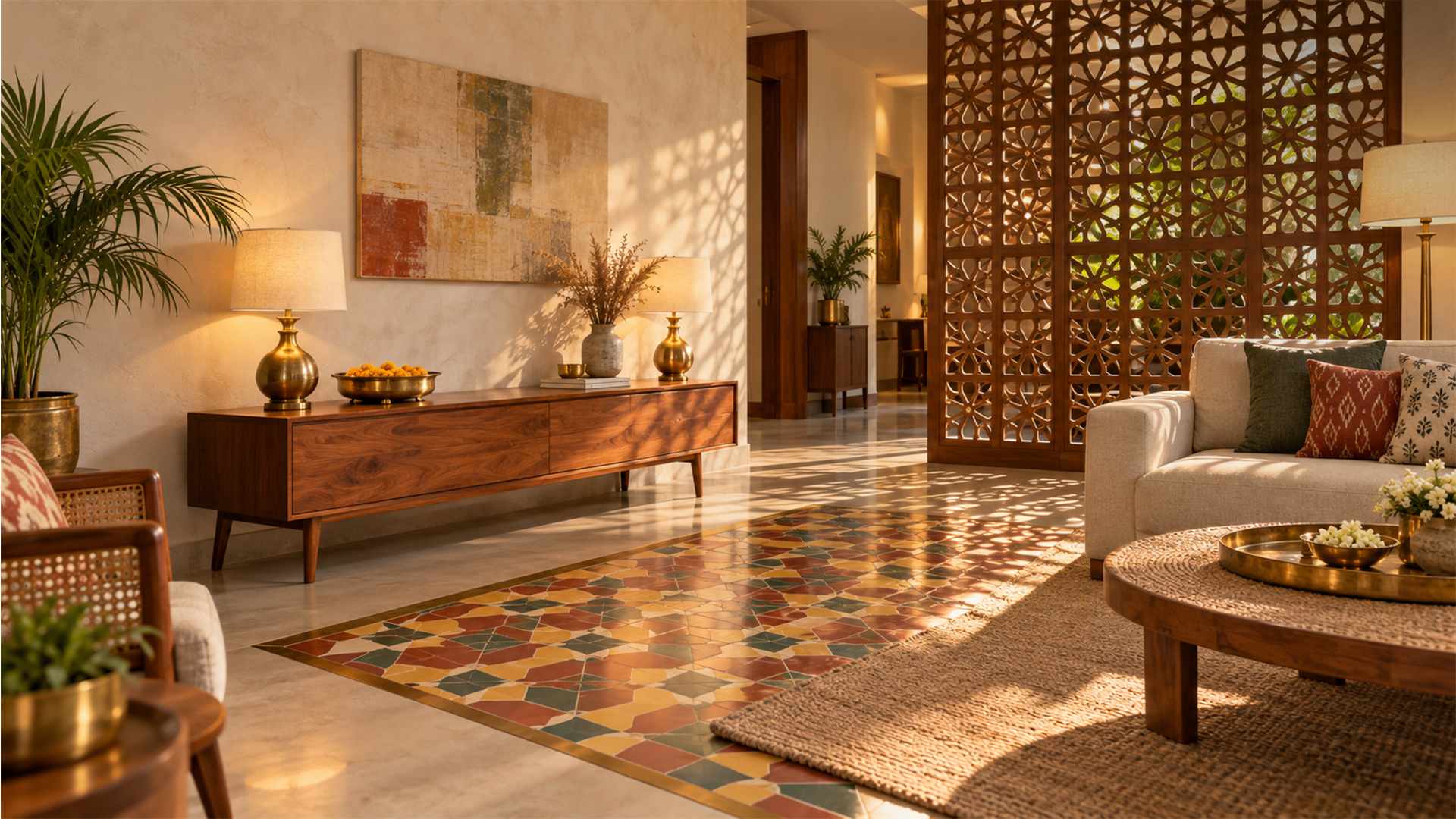
For a while, the modern Indian home looked much like a modern home anywhere: glossy laminates, grey sofas and chrome fittings. That is changing. Homeowners in Chennai, Bengaluru, Mumbai and Delhi are returning to materials their grandparents knew well: brass lamps and hardware, solid teak, handmade Athangudi tiles and carved jaali screens.
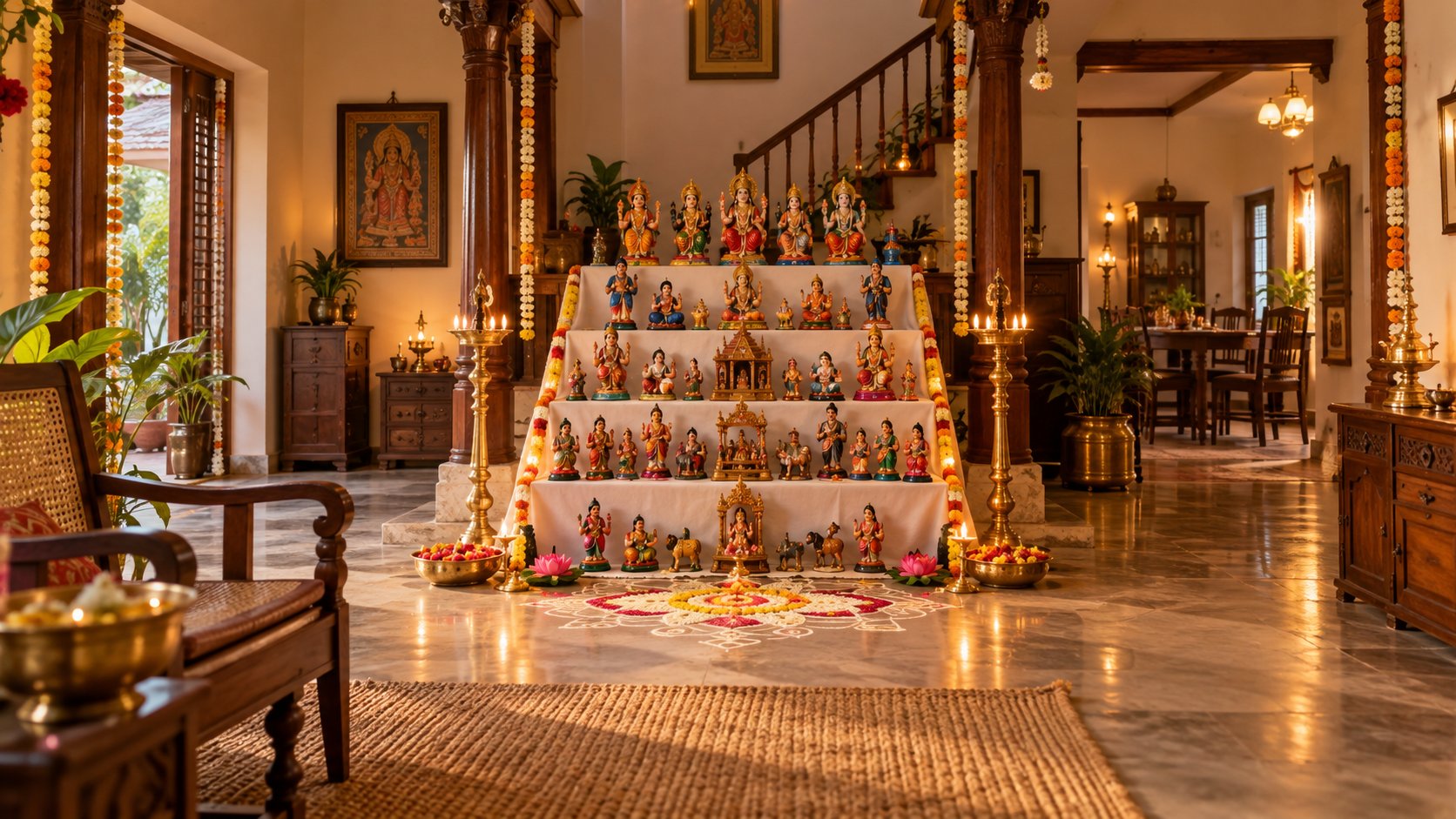
The festive season makes the case for these materials better than anything. A brass kuthuvilakku glows warmer against teak than against laminate. A jaali screen throws patterned light when diyas are lit behind it. An Athangudi floor gives a kolam or rangoli a rich backdrop. This guide explains how to use these four materials in a contemporary home, without it looking like a heritage museum. For the wider festive picture, see our Festive Home Interior Guide for Navratri, Golu, Dussehra and Diwali.
Why Traditional Materials Are Coming Back
- They age well. Brass develops a patina, teak deepens in colour and Athangudi tiles soften with use.
- They suit the Indian climate. Teak resists moisture and termites, and Athangudi tiles stay cool underfoot.
- They carry craft and story. Each material connects the home to a region and its artisans.
- They balance minimalism. A single traditional element stops a clean, modern room from feeling cold.
For more on this shift, see From Rajasthan to Kerala: Regional Indian Interior Styles That Are Making a Comeback and The Rise of Earth-Toned Interiors.
Brass: Warmth and Ritual
Brass has been part of Indian homes for centuries, in lamps, puja vessels, urulis, bells and door hardware. Its warm golden tone suits both festive and everyday settings.
Where it works in a modern home:
- Lighting: brass pendants, wall lights and table lamps.
- Hardware: handles, knobs and hinges on wardrobes, kitchen shutters and doors.
- Inlays: thin brass strips in flooring, wall panels or tabletops.
- Pooja and display: kuthuvilakku, bells, urulis and diya stands.
Unlacquered brass darkens and develops a patina that many people love. Lacquered brass stays bright but can wear unevenly. Clean with a soft cloth; for traditional lamps, many families still use tamarind or lemon with a little salt.

Teak: The Wood That Lasts
Teak has long been prized in Indian homes for doors, pillars, furniture and pooja units. Its natural oils help it resist moisture, termites and warping, which matters in humid cities like Chennai and Mumbai. Kerala’s Nilambur teak and Burma teak are among the best known.
Where it works in a modern home:
- Main doors and pooja unit doors, often with carving or brass studs.
- Statement furniture: consoles, dining tables, benches and swings (oonjal).
- Wall panelling, ceiling details and window frames.
- Veneer on modern carcasses, for the teak look at a lower cost and weight.
Keep teak away from long periods of direct sun and standing water, and oil or polish it periodically to keep its colour. For more on wood choices, read our Expert Guide to Premium Furniture Materials for Luxury Interiors.
Athangudi Tiles: Chettinad’s Handmade Floors
Athangudi tiles come from the village of Athangudi in the Chettinad region of Tamil Nadu. They are handmade from cement, local sand and natural oxides, poured into patterned moulds on glass and cured with water rather than fired in a kiln. The result is a glossy, colourful, cool-underfoot tile with patterns that range from florals to geometrics.
Where it works in a modern home:
- A rug-like inset in a living room or entrance foyer.
- The floor of a pooja room or prayer niche.
- A kitchen or bathroom backsplash for a pop of pattern.
- Verandas, balconies and courtyards.
Athangudi tiles look best when used as a feature rather than across an entire home. They are porous and should be sealed and cleaned with mild, non-acidic cleaners. The surface develops a soft sheen over time.
Jaali: Light, Air and Privacy
Jaali, the perforated screen, appears across Indian architecture, from the carved stone screens of Mughal monuments to the wooden jaalis of Rajasthani havelis and Chettinad homes. It lets in light and air while giving privacy, and it casts beautiful patterned shadows.
Where it works in a modern home:
- Partitions between living, dining and pooja areas.
- Pooja unit doors that let lamps glow through.
- Wardrobe and cabinet shutters with ventilation.
- False ceiling panels with concealed lighting behind them.
- Balcony and window screens.
Modern jaali can be CNC-cut in wood, MDF, metal or stone, which makes intricate patterns affordable and precise. Backlit jaali is especially striking during Diwali, when warm light shines through. Browse our pooja unit designs.

The Four Materials Compared
| Material | Character | Best uses | Care |
| Brass | Warm, reflective, develops patina | Lighting, hardware, inlays, pooja items | Soft cloth; occasional polish |
| Teak | Rich, durable, moisture-resistant | Doors, statement furniture, panelling | Periodic oiling; avoid standing water |
| Athangudi tiles | Handmade, colourful, cool underfoot | Feature floors, pooja rooms, backsplashes | Seal; mild non-acidic cleaners |
| Jaali | Patterned, airy, filters light | Partitions, pooja doors, screens | Dust regularly; check finish on wood |
Other Indian Materials Worth Knowing
- Kota stone and Jaisalmer stone for durable, earthy floors.
- Red oxide flooring, common in older South Indian homes, now making a comeback.
- Cane and rattan for chairs, headboards and cabinet shutters.
- Handloom textiles such as Kanchipuram silk, ikat and kalamkari for cushions and drapes.
- Tanjore and Pichwai paintings as focal artwork.
Five Rules for Blending Tradition Without Looking Dated
- Choose one hero material per room. Let a jaali, an Athangudi inset or a teak console lead, and keep the rest simple.
- Keep backgrounds calm. Neutral walls, clean-lined furniture and plain fabrics let traditional pieces stand out.
- Use traditional materials in modern forms. A brass pendant with a clean profile or a CNC-cut jaali in a geometric pattern feels current.
- Mix textures, not styles. Pair teak with linen, brass with matte stone, Athangudi with plain white walls.
- Light them well. Warm, layered lighting brings out the depth of wood, brass and tile.

https://in.pinterest.com/pin/614108099230391224/
Traditional Meets Modern, Room by Room
| Room | Idea |
| Entrance | Carved teak door with brass studs, an Athangudi inset for kolam or rangoli |
| Living room | Jaali partition, teak console with brass lamps, oonjal (swing) |
| Pooja space | Teak unit with jaali doors, brass bells, Athangudi-tiled floor |
| Dining | Solid teak table, brass pendant lights |
| Kitchen | Athangudi backsplash, brass handles on matte shutters |
| Bedroom | Cane headboard, teak side tables, handloom bedding |
| Bathroom | Athangudi feature wall, brass fittings |
Bring Indian Craft Into Your Home
Traditional materials give a contemporary home roots. Brass, teak, Athangudi and jaali bring warmth, texture and story, and they come alive during the festive season, when lamps are lit and family gathers. Used with restraint, they make a home feel both modern and unmistakably Indian.
At Vibrant Spaces, we work with these materials every day, from teak pooja units with jaali doors to brass-detailed wardrobes and Athangudi-tiled feature floors. Every piece of woodwork is made in our own factory, with more than 10 years of experience and a 5-year warranty. Explore our luxury interiors and bespoke furniture, or design with us from anywhere in India through Spayci, our AI-powered virtual design lab.
Want to bring Indian craft into your home? Schedule a consultation with our designers. For a softer, pared-back approach, read [Minimalist Festive Interiors: An Elegant Indian Home Without Overdoing It] [link when live].
Frequently Asked Questions
What are Athangudi tiles?
Athangudi tiles are handmade cement tiles from the Chettinad region of Tamil Nadu. They are made with cement, local sand and natural oxides, cured with water instead of being fired, and known for their colourful patterns and cool surface.
Are Athangudi tiles good for modern homes?
Yes, especially as a feature: an entrance inset, a pooja room floor or a backsplash. They should be sealed and cleaned with mild, non-acidic products.
Is teak good for furniture in humid cities like Chennai?
Yes. Teak’s natural oils help it resist moisture, termites and warping, which makes it well suited to humid climates. Periodic oiling keeps its colour.
How do I use jaali in a modern home?
Use jaali for partitions, pooja unit doors, wardrobe shutters, false ceiling panels or balcony screens. CNC-cut geometric patterns and concealed backlighting give it a contemporary feel.
How do I stop brass from tarnishing?
Lacquered brass resists tarnish but can wear unevenly. Unlacquered brass develops a natural patina. Clean with a soft cloth and polish occasionally if you prefer a bright finish.
How can I make traditional décor look modern?
Use one hero traditional material per room, keep walls and furniture simple, choose traditional materials in clean, contemporary forms and light them warmly.



Leave A Comment