
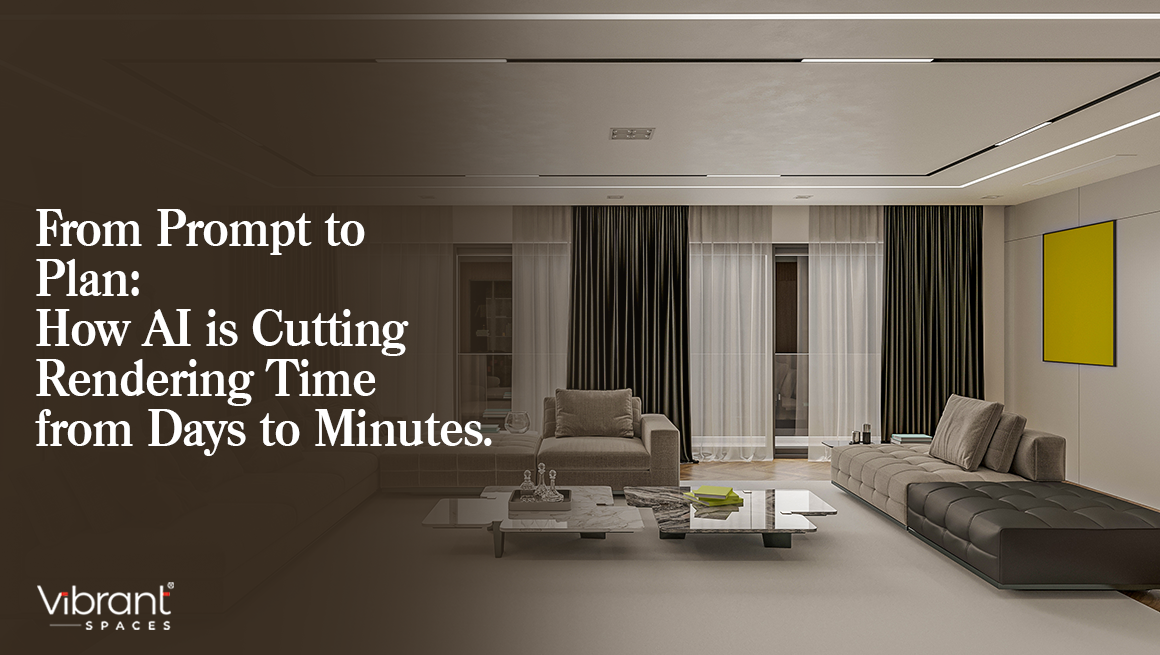
A decade ago, turning a raw interior concept into a realistic 3D visualization meant patience. Designers would sketch, model, texture, render, and wait—often overnight. A complex visualization with custom materials could take days. Today, that waiting time is shrinking to minutes. Thanks to AI-driven rendering tools, the design world is witnessing one of its biggest time revolutions.
Why Rendering Was Slow in the First Place
Traditional rendering engines calculate light bounce, shadow depth, surface reflection, material thickness, and environmental lighting. These calculations demand heavy computing power. Designers needed powerful workstations, GPU farms, and hours of iteration.
Each change—different flooring, altered lighting, or a new layout—meant starting over.
AI Has Changed the Model
Enter AI-assisted rendering. Software powered by machine learning no longer starts from scratch every time. Instead, it recognizes patterns from millions of reference visuals and predicts how light, materials, and textures will behave. With this ability, AI tools skip unnecessary calculations and deliver near-realistic renderings in a fraction of the time.
Today, designers type a prompt like:
‘Scandinavian bedroom with rattan furniture and soft lighting.’
Within seconds, they receive a near-accurate visualization. Instead of building everything from ground zero, AI generates a concept image that can be refined into final professional renderings.
Rapid Iteration: The New Superpower
One of the most frustrating parts of rendering used to be revisions. Clients might ask for darker wood, wider tiles, or mirror instead of artwork. Each edit required re-rendering. With AI-driven systems, the designer can modify details instantly:
- Change flooring with a text prompt.
- Test lighting variations in minutes.
- Swap furniture and décor instantly.
This significantly reduces back-and-forth revision time, making design meetings faster and clearer.
From Inspiration to Execution
AI doesn’t just speed up rendering—it bridges inspiration and execution. Designers can generate dozens of variations, extract styles, and even match a client’s Pinterest mood board using prompt-based tools.
Once a concept is approved, the details are transitioned into technical drawings using BIM and CAD tools that align closely with the AI-generated design.
Does AI Replace Designers?
Not even close. AI visualizes; designers conceptualize. Design is still about psychology, lifestyle needs, budget decisions, sustainability, and spatial logic—areas AI cannot understand intuitively.
What AI replaces is repetitive labor, not creativity.
The Real Benefit: More Time for Design Thinking
With rendering time cut from days to minutes, designers now focus on:
- Research
- Material selection
- Space planning
- Client experience
- Sustainability
The result is not just faster output, but smarter design.
Rendering was once a bottleneck that kept ideas waiting. Now, AI tools translate prompts into plans, visuals, and multiple options within minutes. This shift enables designers to spend their energy where it matters most: creating meaningful spaces.
The future of interior design is finally free from waiting.





Leave A Comment