
Imagine a house that repairs itself like skin, tiles that grow from bacteria, or walls that purify the air naturally. Welcome to the world of bio-fabricated and living materials—where the future of architecture literally grows.
What Are Bio-Fabricated Materials?
Bio-fabrication uses living organisms such as fungi, algae, bacteria, or agricultural waste to produce construction materials. Unlike concrete or plastic, these materials grow organically and can regenerate or biodegrade without leaving waste behind.
Examples include:
- Mycelium (mushroom) bricks.
- Self-healing bacterial concrete.
- Algae-based insulation panels.
- Cork and hemp biocomposites.
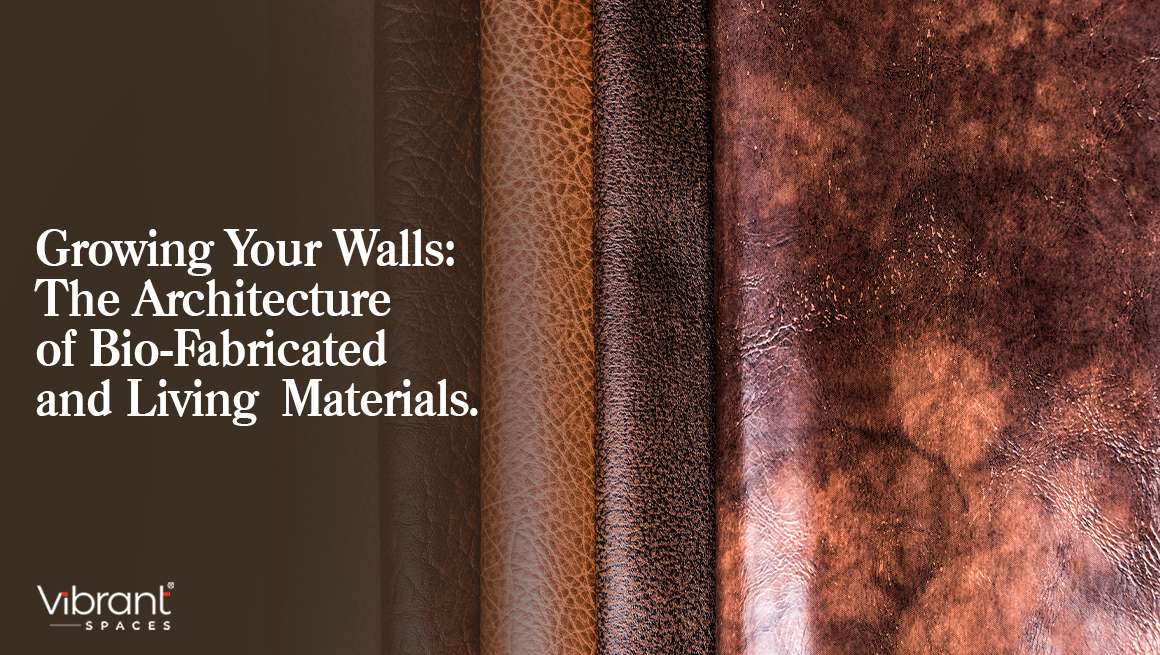
- Bio-leather from cellulose.
These materials are lightweight, strong, energy-efficient, and sustainable.
Why the World Needs Living Architecture
Traditional construction is one of the most resource-intensive industries on the planet. Concrete alone accounts for nearly 8% of global carbon emissions. Every stage of the construction cycle, from extracting raw materials to transporting them to firing bricks and producing cement, consumes massive amounts of energy and releases greenhouse gases.
Living architecture flips this model on its head.
Bio-fabricated materials rely on biological processes— like bacteria that produce minerals, fungi that knit themselves into strong networks, or algae that sequester carbon— to form durable structures. These materials often thrive on low energy, low waste, and low emissions, making them one of the most sustainable pathways forward.
What makes them especially powerful is their ability to use what the world typically throws away. Agricultural waste, food scraps, sawdust, and even wastewater can become raw material for bio-grown tiles, panels, and bricks. This creates a circular ecosystem.
For cities struggling with pollution, resource scarcity, rising temperatures, and carbon targets, living architecture is more than an innovation— it’s a necessity.
Buildings That Heal, Breathe, and Clean
The next generation of architecture could consist of responsive materials. Examples:
- Self-healing concrete uses bacteria that fill cracks when exposed to moisture.
- Algae facades absorb CO₂ while providing shading and insulation.
- Mycelium walls resist fire naturally and grow into complex shapes with zero molds.
These living structures can repair, purify, and protect themselves— reducing maintenance costs and increasing life cycles.
Challenges in Growing Materials
Despite the potential, living materials face hurdles such as scale, humidity control, regulations, and public acceptance. Architects and scientists need to collaborate to standardize production and adapt building codes.
The Designer’s Role in a Living Future
Designers must think beyond drawing walls— they must cultivate them. They must consider climate, microbiology, lifecycle, and local biodiversity as design factors. The architect of the future becomes part scientist, part gardener.
Bio-fabricated architecture is more than sustainable construction, it’s a living collaboration between humans and nature. As our cities expand, the idea of growing our buildings, instead of manufacturing them, might be the most natural solution of all.










Leave A Comment