
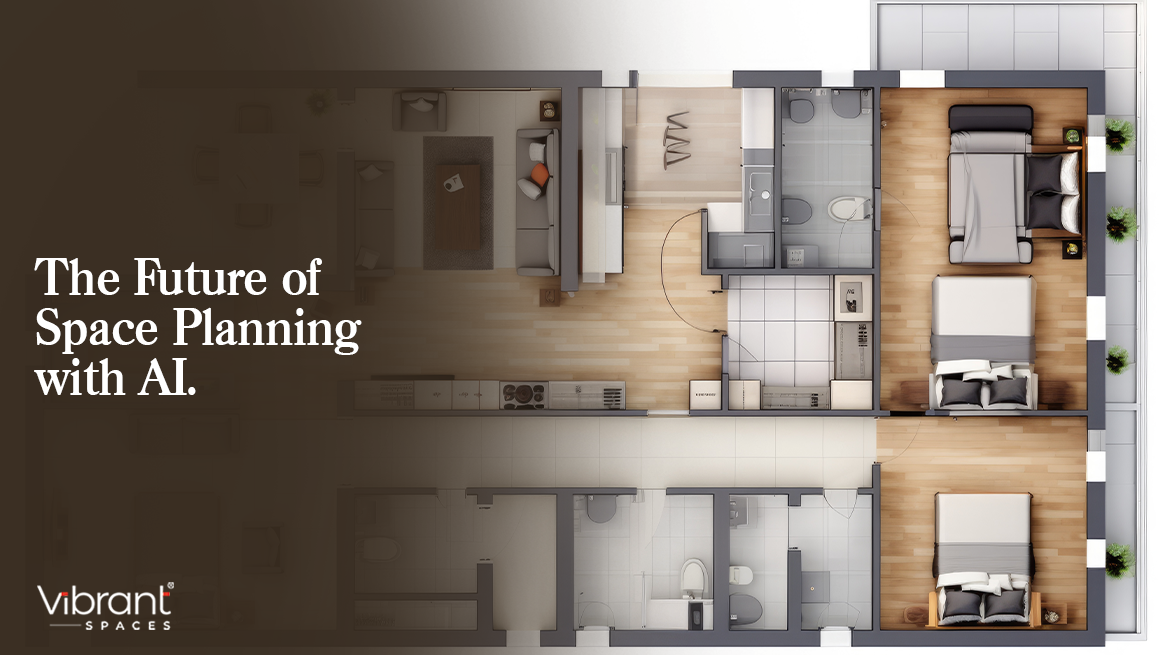
Every great space begins with planning. Before furniture, decor, technology, or color schemes enter the discussion, designers must understand movement, usability, comfort, scale, and flow. Space planning has always been a crucial step in creating homes, offices, hospitality projects, and commercial spaces.
With lifestyles becoming more complex and living spaces getting smaller, planning today requires more intelligence than ever. Fortunately, AI is changing how designers think about and execute layouts.
Why Space Planning Needs a Smarter Approach
Urban homes are shrinking. Workplaces are hybrid. Retail spaces are multi-functional. Hospitality and long-stay living now demand storage efficiency, compact layouts, and wellness-driven design. Planning no longer revolves around simply ‘placing furniture.’ It demands expertise in circulation, light flow, acoustics, accessibility, and human behavior.
This complexity has pushed design tools to evolve. AI is entering space planning not to draw automatically, but to think algorithmically.
How AI Understands Space
AI-based planning tools can analyze thousands of floor plans and understand how people typically move and interact with their surroundings. They factor in:
- Circulation paths and entry flow.
- Ideal distances between furniture.
- Ergonomic standards for sitting, walking, or stretching.
- Natural light direction and shadowing.
- Storage needs for different lifestyles.
- Accessibility needs for elderly and disabled users.
With this data, AI instantly suggests optimal layouts tailored to user needs, helping designers generate variations faster while maintaining practicality.
Personalized Planning, Not Generic Layouts
Traditional layouts often begin with standard templates. AI offers something more valuable— customization at any scale.
If the user profile includes:
- A toddler in the house → safer edges, storage at child height.
- A remote worker → a dedicated desk with proper lighting and acoustics.
- An elderly resident → accessible path widths, non-slip routes, ergonomic seating.
AI adapts the planning to an individual’s needs rather than trends. It learns from lifestyle inputs and translates them into spatial decisions.
Faster Approvals and Collaboration
One of the biggest delays in design projects comes from revision cycles. AI speeds this up by allowing instant alternatives. Designers can show multiple layouts during presentations instead of using separate sessions for rework. Clients visualize possibilities faster, and decisions are made with more clarity.
Reducing Waste and Supporting Sustainability
AI can generate layouts that:
- Maximize daylight.
- Improve natural ventilation.
- Reduce reliance on artificial lighting.
- Minimize awkward corners that waste materials.
- Suggest optimal electrical routing.
Smarter layouts reduce renovation waste and lower long-term energy use, contributing to sustainable design.
AI as a Design Partner
AI calculates, but it doesn’t empathize. It understands movement, but not emotion. It sees proportions, but not personal meaning. Design will always need human character—cultural sensitivity, storytelling, emotional connection, and aesthetic judgment.
AI is not replacing designers, it is amplifying them. It frees time, supports decision-making, and leaves designers with what they do best: turning spaces into experiences.
The future of planning is not automated design, but intelligent collaboration between AI and human creativity.







Leave A Comment